
How to Choose a Primary Care Doctor: Tips for Finding the Right PCP
Finding a primary care doctor is one of the most important health decisions you can make. Your primary care provider (PCP) is often the first person you call when you’re sick, need preventive care or have questions about your health.
The right doctor can help you stay healthier, catch problems early and coordinate your care if you need specialists.
But not every doctor is the right fit for every patient. Taking a little time to choose carefully can make a big difference.
What Is a Primary Care Doctor?
A primary care doctor is your main healthcare provider. They help with:
- Annual wellness visits
- Preventive screenings
- Vaccinations
- Common illnesses
- Managing chronic conditions like diabetes or high blood pressure
- Referrals to specialists when needed
Some primary care providers are physicians, while others are nurse practitioners or physician assistants working with a medical team.
Why Choosing the Right Primary Care Doctor Matters
A good relationship with your doctor makes it easier to ask questions, discuss concerns and make informed decisions.
Research shows that people who have a regular primary care provider often have better health outcomes, lower healthcare costs and fewer hospital visits.
Start With Your Health Insurance
Before making appointments, check whether the doctor accepts your insurance plan.
Most insurance companies have an online provider directory where you can search for doctors who are in-network. Choosing an in-network provider usually means lower out-of-pocket costs.
Decide What Type of Doctor You Want
Several types of providers offer primary care.
Family Medicine Doctors
Family medicine doctors care for patients of all ages, from children to older adults.
Internal Medicine Doctors
Internists focus on adults and often care for patients with multiple medical conditions.
Geriatric Doctors
These physicians specialize in caring for older adults.
Pediatricians
Pediatricians provide primary care for infants, children and teenagers.
Consider Location and Office Hours
Convenience matters more than many people realize.
Ask yourself:
- Is the office close to home or work?
- Is parking easy?
- Are evening or weekend appointments available?
- Does the office offer telehealth visits?
- Is the location accessible if you have mobility concerns?
If getting to appointments is difficult, you’re less likely to keep up with routine care.
Look at the Doctor’s Credentials

Most doctors list their education, board certification and areas of interest on their practice website.
Board certification means the physician has completed additional training and met standards in their specialty.
You can also verify credentials through the American Board of Medical Specialties.
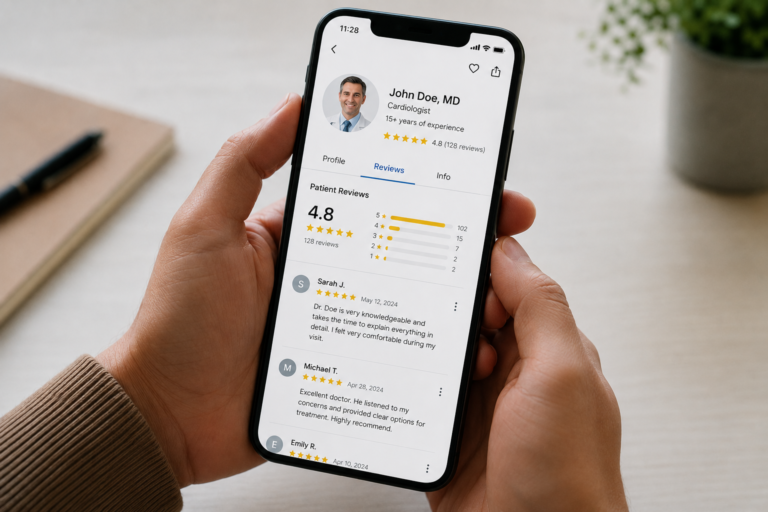
Read Patient Reviews Carefully
Online reviews can be helpful, but don’t rely on them alone.
Instead of focusing on one negative review, look for patterns.
Patients often comment on:
- How well the doctor listens
- Appointment wait times
- Office staff
- Ease of scheduling
- Communication after visits
Remember that every patient’s experience is different.
Ask Friends and Family
Recommendations from people you trust can be valuable.
Ask questions like:
- Do you feel heard during appointments?
- Does the doctor explain things clearly?
- Can you usually get an appointment when you’re sick?
- Does the office return phone calls promptly?
Schedule a First Appointment
You don’t have to wait until you’re sick.
A routine wellness visit is a good opportunity to decide whether the provider is a good fit.
During the visit, pay attention to how you feel.
Ask yourself:
- Did the provider listen without interrupting?
- Were my questions answered?
- Did I feel respected?
- Were treatment options explained clearly?
- Would I feel comfortable coming back?
Trust your instincts. Feeling comfortable with your healthcare provider is important.
Don’t Be Afraid to Change Doctors
Sometimes a doctor simply isn’t the right fit.
It’s okay to choose someone else if you consistently feel rushed, dismissed or unable to communicate openly.
Your healthcare works best when you feel comfortable asking questions and participating in decisions.
Questions to Ask a New Primary Care Doctor
Bringing a list of questions can help you make the most of your first visit.
Consider asking:
- How do you prefer patients contact the office?
- How quickly can I usually get an appointment?
- Do you offer same-day sick visits?
- How are test results shared?
- Who covers for you when you’re away?
- Do you use a patient portal for messages and records?
- How do you involve patients in treatment decisions?
Keep Your Own Health Records
Even after choosing a doctor, it’s a good idea to keep copies of your important medical information.
This includes:
- Medication lists
- Allergies
- Vaccination records
- Lab results
- Imaging reports
- Specialist visits
- Hospital discharge papers
Having your own records can make it easier to change providers, get a second opinion or respond quickly during a medical emergency.
The Bottom Line
Choosing a primary care doctor isn’t just about finding someone covered by your insurance. It’s about finding a healthcare partner who listens, communicates clearly and helps you stay healthy over time.
Take your time, ask questions and remember that it’s okay to switch providers if your needs aren’t being met. A strong relationship with your primary care doctor is one of the best investments you can make in your long-term health.
Frequently Asked Questions
How often should I see my primary care doctor?
Most adults should have regular preventive visits based on their age, health history and risk factors. Your provider can recommend the right schedule for you.
Can I change my primary care doctor?
Yes. Most insurance plans allow you to change primary care providers. Check your insurance company’s requirements before scheduling your first visit with a new doctor.
Should I choose a doctor or a nurse practitioner?
Both can provide high-quality primary care. The best choice depends on your health needs, the practice and which provider makes you feel comfortable and heard.
What if I don’t feel listened to?
If you repeatedly feel rushed or dismissed, it’s reasonable to look for another provider. Good communication is an important part of quality healthcare.
Source
- Agency for Healthcare Research and Quality. Questions Are the Answer patient communication resources.
- The Commonwealth Fund. The Value of Primary Care: More Investment Needed.