

Why Speaking Up at the Doctor’s Office Can Feel So Hard (and Why You Should Anyway)
Were you taught to respect authority? To be polite? To avoid interrupting? Maybe you learned that asking too many questions was rude or that “the experts know best.”
Same here!
Those lessons may have helped you in many situations, but they can make it difficult to speak up during a medical appointment. If you’ve ever nodded along even though you didn’t understand what your doctor meant, you’re not alone.
The truth is, asking questions isn’t a sign of disrespect. It’s one of the most important things you can do to protect your health. Good healthcare is a partnership, and understanding your care is part of that partnership.
Sometimes the hardest part of a doctor’s appointment isn’t getting there. It’s finding the courage to ask the questions that matter.
It’s Okay (and Expected) for You to Ask if You Don’t Understand
Have you ever left a doctor’s appointment thinking, “I should have asked about that”?
Maybe you didn’t understand a medical term. Maybe you weren’t sure why a test was ordered. Or maybe you felt rushed and didn’t want to take up more of the doctor’s time.
If that sounds familiar, you’re not alone.
Many of us were raised to respect authority figures, avoid asking too many questions and trust that the experts know best. Those lessons may have helped us growing up, but they can make it difficult to speak up during medical appointments.
The good news? Asking questions isn’t disrespectful. It’s one of the most important things you can do to protect your health.
Why It Can Feel Uncomfortable to Ask Questions
For many people, staying quiet isn’t a choice. It’s a habit that started years ago.
You may have been taught things like:
- Respect authority.
- Don’t interrupt adults.
- Don’t question professionals.
- Don’t complain.
- Don’t make a scene.
- Don’t ask “stupid” questions.
Those messages can stay with us long into adulthood.
Then you walk into a medical office. You’re wearing a paper gown, the doctor is busy and unfamiliar medical words are flying around the room. It’s easy to feel like you should simply nod and listen.
But healthcare is one place where staying silent can have real consequences.
Why Understanding Your Care Matters
Doctors, nurses and other healthcare professionals have years of training. They understand medicine.
You understand something they don’t: your body, your symptoms and your daily life.
The best healthcare happens when both kinds of knowledge come together.
When you understand your diagnosis, treatment plan and medications, you’re more likely to:
- Take medications correctly.
- Recognize warning signs early.
- Follow through with recommended care.
- Make informed decisions.
- Feel more confident about your health.
According to the Agency for Healthcare Research and Quality, patients who ask questions and understand their care are better prepared to make informed healthcare decisions.
Your Healthcare Team Expects Questions
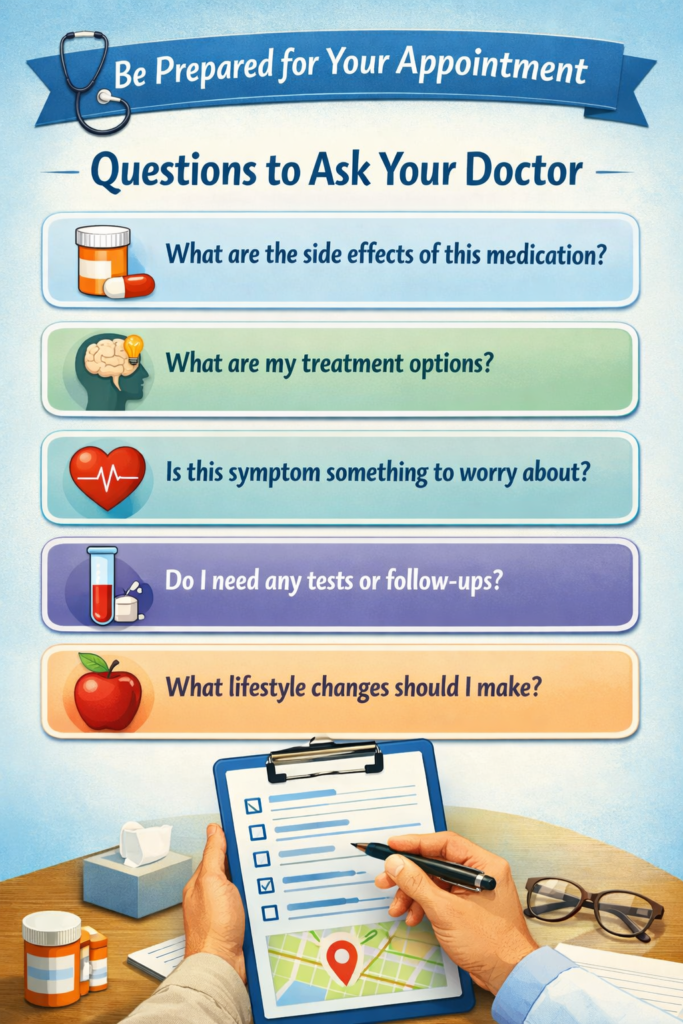
Many people worry they’ll offend their doctor by asking questions.
In reality, most healthcare providers would rather answer a question today than have a patient misunderstand important instructions later.
They don’t expect you to know medical terminology.
They do expect you to tell them when something isn’t clear.
Remember, your appointment isn’t a test. You aren’t expected to have all the answers.
Signs It’s Time to Speak Up
It’s okay to stop the conversation and ask for clarification if:
- You don’t know what a medical term means.
- You aren’t sure why a test is being ordered.
- You don’t understand how to take a medication.
- You don’t know what happens next.
- You’re confused about follow-up care.
- You have concerns about side effects.
- Something doesn’t sound right.
- You leave the appointment with unanswered questions.
If you’re thinking, “I’m confused,” that’s your cue to ask.
Questions That Are Always Okay to Ask
Sometimes knowing what to say makes speaking up easier.
Try questions like:
- Can you explain that another way?
- What does that mean in plain language?
- Why do I need this test?
- What are my treatment options?
- What happens if I decide to wait?
- What side effects should I watch for?
- When should I call your office?
- Can you write those instructions down?
- Is there anything else I should know?
These aren’t diffcult questions, they’re responsible ones.
📄 Free Download
Read Your Own Chart’s: Medical Appointment Planner (5-page PDF)
Prepare for your next doctor’s appointment with this free, printable Medical Appointment Planner. It includes space for your appointment details, symptoms, questions, medications, notes and follow-up instructions.
Click below to download the free, printable 5-page PDF.
Real-Life Examples of Why Speaking Up Matters
- Imagine your doctor says, “Take this medication twice a day.”
- You leave wondering:
- Does that mean every 12 hours?
- Morning and evening?
- With food?
- At bedtime?
- You leave wondering:
One simple question could prevent taking the medication incorrectly.
- Or imagine you’re told, “We’ll keep an eye on it.”
- That sounds reassuring, but what does it actually mean?
- Instead of wondering, you could ask:
- “What exactly are we monitoring, and when should I follow up?”
Now you understand the plan.
Here’s another example.
- A nurse says, “Most of your lab work looked normal.”
- Instead of simply accepting that answer, you ask:
- “Which results weren’t normal?”
- Instead of simply accepting that answer, you ask:
You may learn that one value needs to be rechecked or discussed at your next appointment.
Small questions often lead to important information.
If Speaking Up Doesn’t Feel Like “You”
Changing lifelong habits takes practice.
Start small.
Before your appointment:
- Write down your top three questions.
- Bring a notebook or use your phone to take notes.
- Ask a trusted friend or family member to come with you if possible.
- Bring a current list of your medications.
- Don’t worry about asking every question. Focus on the most important ones first.
During the appointment:
- Tell the provider if you don’t understand something.
- Repeat instructions back in your own words.
- Ask for printed instructions if they’re available.
- Take your time. It’s okay to pause and think.
After the appointment:
- Review your visit summary.
- Read your patient portal notes if they’re available.
- Write down any new questions.
- Call the office if something still isn’t clear.
You don’t have to become outspoken overnight. Every question you ask builds confidence for the next appointment.
Remember: You Are Part of the Healthcare Team
It’s easy to think the doctor is the only expert in the room.
But that’s not entirely true.
Your doctor is the expert in medicine. You are the expert on your own body!
You know:
- When your symptoms started.
- What has changed.
- How treatments affect you.
- What concerns matter most to you.
When you share that information and ask questions, you become an active member of your healthcare team.
That’s exactly where you belong.
Speaking Up Can Help the People You Love
Sometimes you’re not asking questions for yourself.
You may be helping:
- A parent.
- A spouse or partner.
- A child.
- A friend.
- An aging loved one.
Caregivers often notice details that patients miss. Asking one more question could help everyone better understand the diagnosis, treatment plan or next steps.
What If You Feel Dismissed?
Most healthcare providers want their patients to understand their care. But sometimes a question may be brushed aside, answered too quickly or met with a response that leaves you feeling embarrassed or unheard.
If that happens, try not to let it stop you from asking again.
You might say:
- “I’m sorry, but I still don’t understand.”
- “Could you explain that in a different way?”
- “I want to make sure I understand before I leave.” (This is my personal favorite.)
- “This is important to me. Could we go over it one more time?”
You deserve clear answers about your health. Asking for an explanation isn’t being difficult, and it isn’t disrespectful.
If you consistently leave appointments feeling dismissed, rushed or uncomfortable asking questions, it may be time to consider finding another healthcare provider. Trust and good communication are important parts of quality healthcare.
Remember, you’re not looking for a doctor who agrees with you all the time. You’re looking for one who listens, explains and treats your questions with respect.
The Bottom Line
Speaking up at the doctor’s office doesn’t mean you’re being difficult. It doesn’t mean you don’t trust your healthcare provider. And it certainly doesn’t mean you’re being disrespectful.
It means you’re taking an active role in your health.
The goal isn’t to know as much as your doctor. The goal is to understand your care well enough to make informed decisions.
So the next time you hear something you don’t understand, give yourself permission to ask.
One question could give you peace of mind.
It could help you avoid a mistake.
It could even change the course of your care.
And that’s always worth speaking up for.
Understanding your health care isn’t a favor your healthcare team does for you. It’s part of good healthcare. You don’t have to earn the right to ask questions by knowing medical terms or having a medical background. If something doesn’t make sense, keep asking until it does. Your health deserves nothing less.
Frequently Asked Questions
What if I feel embarrassed asking questions?
Remember that healthcare professionals explain medical information every day. If you don’t understand something, chances are someone else has had the same question.
What if my doctor seems rushed?
You still deserve to understand your care. Start with your most important question, and if you need more time, ask if you can schedule a follow-up visit or send questions through the patient portal.
Is it okay to ask for simpler explanations?
Absolutely. You can say, “Could you explain that in plain language?” A good healthcare provider wants you to understand your diagnosis and treatment.
Can I bring someone with me to my appointment?
Yes. A trusted friend or family member can take notes, help you remember questions and provide support during the visit.
Source
Agency for Healthcare Research and Quality. Questions Are the Answer. This national patient education initiative encourages patients to ask questions and better understand their healthcare to improve communication and support informed decision-making.