The Glasses Your Doctor’s Staff Might Be Wearing Are Smarter Than You Think
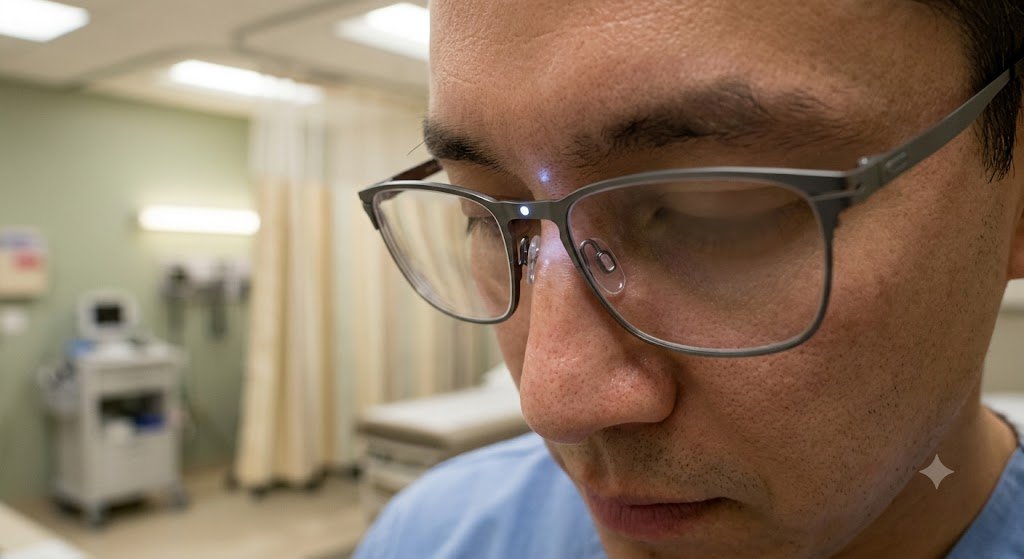
You’re in an exam room. A staff member walks in wearing glasses that look a little different from regular eyewear — slightly thicker frames, maybe a small light near the bridge or temple. You might not think anything of it.
You probably should.
AI-enabled smart glasses are already in use in some healthcare settings, and there’s currently no federal law requiring staff to tell you before they walk into your appointment wearing one. That doesn’t mean you’re without options. It means you need to know what to look for, what to ask your care team, and what to do if the answers aren’t good enough.
What AI Glasses Actually Do
AI-enabled smart glasses look like regular eyewear but contain built-in microphones, cameras, wireless connectivity, and an AI system that can record, transcribe, or process what the device captures in real time.
Some are purpose-built for medical use, with strong security protocols and designed specifically for clinical documentation. Others are consumer products, like Meta Ray-Ban smart glasses, that were built for everyday personal use and are now showing up in professional settings they were never designed for.
Those are two very different situations, and as a patient, you may have no way to tell which one you’re looking at.
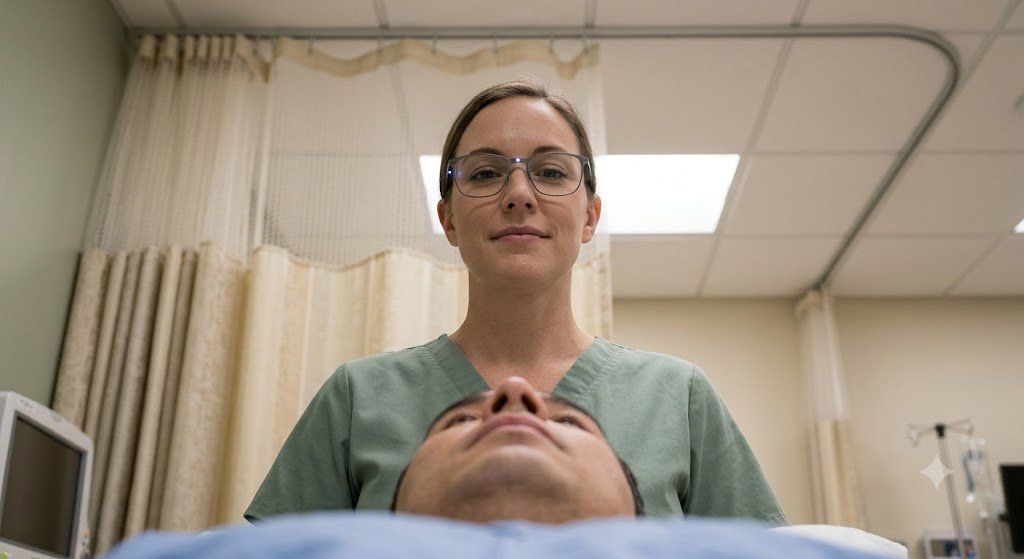
Most models include a small LED indicator light that’s supposed to show when the device is actively recording. The problems with relying on that light as your safety net:
- It’s often very small and easy to miss, especially if you’re lying on an exam table
- You have to know what you’re looking for in the first place
- There is already a market online for stickers specifically designed to cover that light
The indicator light exists. What it actually protects depends entirely on whether the person wearing the device is being transparent with you — and whether you knew to look in the first place.
Why This Is a HIPAA Gray Area
HIPAA, the Health Insurance Portability and Accountability Act, is the federal law that requires healthcare providers to protect your medical information and, in most cases, get your consent before sharing it.
HIPAA applies to covered entities: hospitals, clinics, insurers. It also applies to their business associates, like vendors and contractors who handle patient data on behalf of those facilities. But here’s the gap: if an AI vendor hasn’t signed a Business Associate Agreement (BAA) with the hospital, that vendor may fall entirely outside HIPAA’s reach. Your data could be processed by a third-party platform with none of the protections HIPAA is supposed to provide.
The hospital may be fully HIPAA-compliant. The glasses sending data somewhere else may not be.
This isn’t a hypothetical concern. Healthcare data breaches averaged $9.77 million per incident in 2024, the highest of any industry for the fourteenth year in a row, and most breaches traced back to third-party vendor vulnerabilities.
What to Ask Before Your Appointment Starts
You don’t have to wait until you notice something unfamiliar on a staff member’s face. You can ask before the exam begins, or even when you schedule the appointment. These are reasonable questions every patient has the right to ask:
- Are any AI-enabled devices or recording tools used in this facility’s exam rooms?
- Is the device actively recording, or does it only capture when activated?
- Where does the data go after my appointment, and who has access to it?
- Has the vendor behind this technology signed a Business Associate Agreement with this facility?
- Can my data be used to train AI models?
- Note: Many platforms include this in their terms of service, and patients are rarely told.
- What is the facility’s written policy on AI devices in exam rooms?
- Do I have the right to ask that the device not be used during my visit?
Ask these questions calmly and directly. If the person you’re speaking with doesn’t know the answers, ask to speak with a patient advocate, a privacy officer, or the department manager. Every HIPAA-covered facility is required to have a Notice of Privacy Practices — a written document explaining how your health information is used. You can request that in writing.
What to Do If the Response Isn’t Adequate
If you ask and you’re dismissed, given vague answers, or told there’s nothing you can do, that’s important information too. Here’s how to escalate:
At the facility level:
- Ask to speak with the facility’s HIPAA Privacy Officer directly.
- Note: Every covered entity is required to have one.
- Request a written copy of their AI device policy and their Notice of Privacy Practices.
- Document the date, time, the name of who you spoke with, and what was said.
- Note: Write it down as soon as you leave.
At the regulatory level:
- You can file a HIPAA complaint directly with the HHS Office for Civil Rights.
- OCR investigates complaints and has the authority to impose fines and corrective action on non-compliant organizations.
- Complaints can be filed online, by mail, or by phone.
- If your state has stronger privacy protections than federal HIPAA, and some do ,your state’s attorney general office may be an additional avenue.
At the practical level:
- Under HIPAA, you have the right to request an accounting of disclosures.
- This is a record of who your protected health information was shared with and why.
- You can submit that request in writing to the facility.
- If you believe your information was recorded and shared without your knowledge or consent, consult a patient rights attorney. Many offer free initial consultations.
Wondering How AI Glasses Fit in Home Health Cre Settings?
Home health nurses could face a new wrinkle with AI glasses, too.
Picture a nurse wearing smart glasses during a home visit. The device might capture more than the patient’s vital signs.
It could pick up medication bottles on the counter, other people in the room, or private conversations.
That raises the same HIPAA questions that apply to any device recording protected health information.
Before any healthcare provider adopts this technology, they need clear answers about how that data is captured, stored, and protected.
AI Glasses in Health Care Settings
AI in healthcare isn’t inherently bad. Ambient documentation tools can reduce physician burnout and actually free up providers to focus on the patient in front of them. Some facilities deploy these tools carefully, with proper consent processes and verified vendor agreements.
But “some facilities do it right” is not the same as “you’re protected.”
Right now, whether you’re informed before an AI device enters your exam room depends almost entirely on the individual provider or facility, not on any consistent legal requirement. Until that changes, the burden falls on patients to ask.
You are allowed to ask. You are allowed to expect an answer. And if the answer isn’t good enough, you have real places to go with that.
Under HIPAA, your health information belongs to you. So does the right to know what happens to it.
Have questions about your rights as a patient? Browse the RYOC library or reach out directly.